CASE | NFA
CASE | NFA
Redesigning the NFA Website
Redesigning the NFA Website
Redesigning the NFA Website
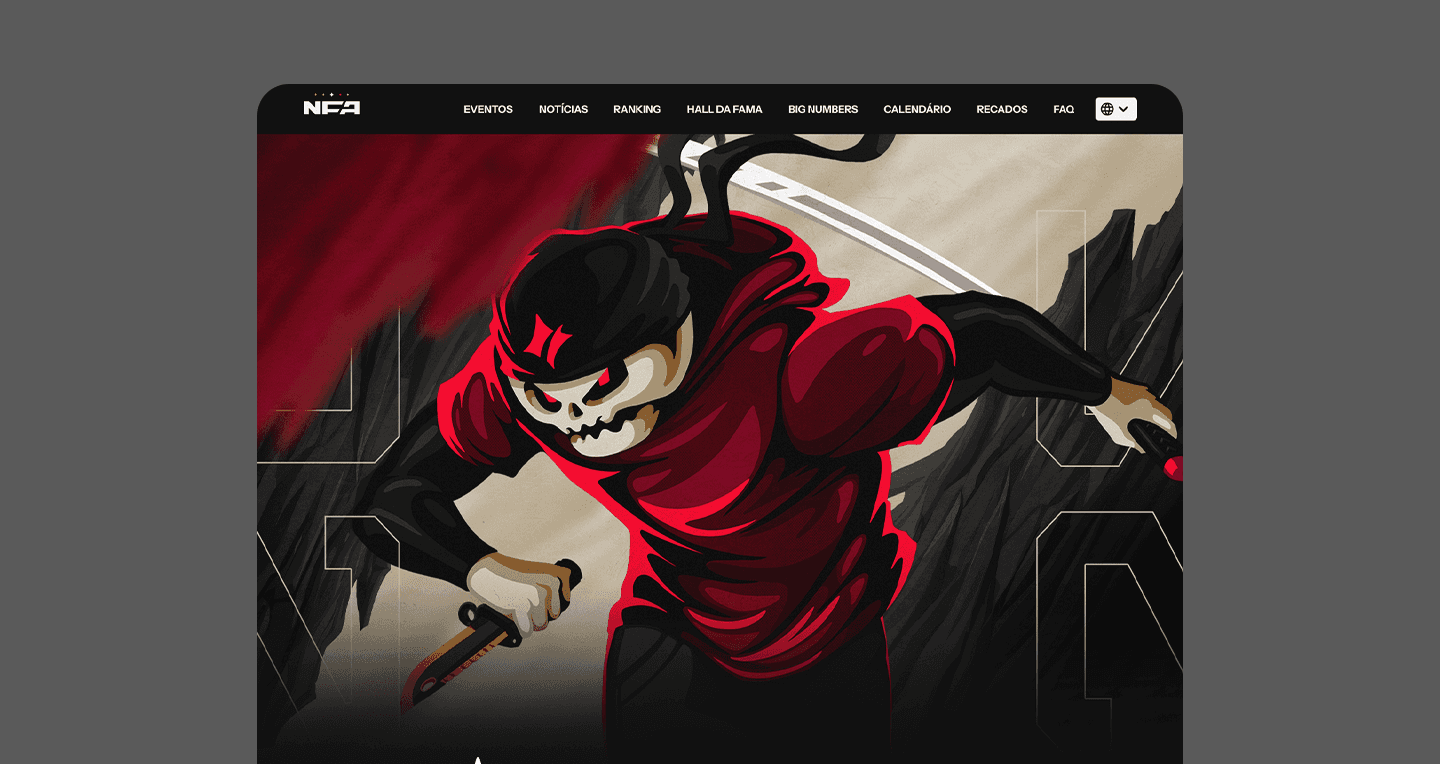
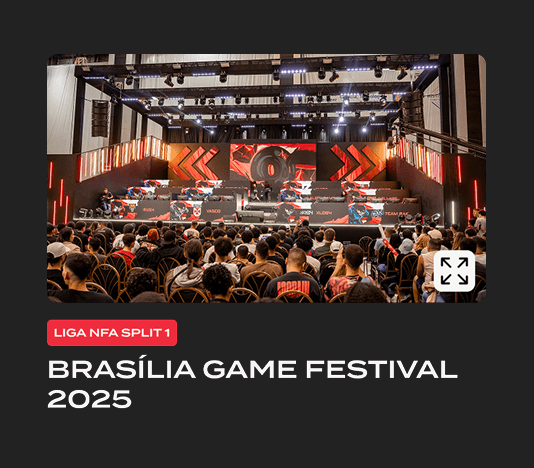
NFA is the largest independent Free Fire championship in Brazil. As a key reference for the competitive community, its digital platform needed to reflect the brand’s scale and operate consistently across multiple regions and languages.
NFA is the largest independent Free Fire championship in Brazil. As a key reference for the competitive community, its digital platform needed to reflect the brand’s scale and operate consistently across multiple regions and languages.
NFA is the largest independent Free Fire championship in Brazil. As a key reference for the competitive community, its digital platform needed to reflect the brand’s scale and operate consistently across multiple regions and languages.
Categories
Categories
Esports
Esports
Website
Website
Year
Year
2025
2025
Role
Role
Product Designer
Product Designer
Client
Client
NFA
NFA
• THE PROBLEM
NFA's site couldn't hold the weight of the brand it represented
NFA's site couldn't hold the weight of the brand it represented
NFA's site couldn't hold the weight of the brand it represented
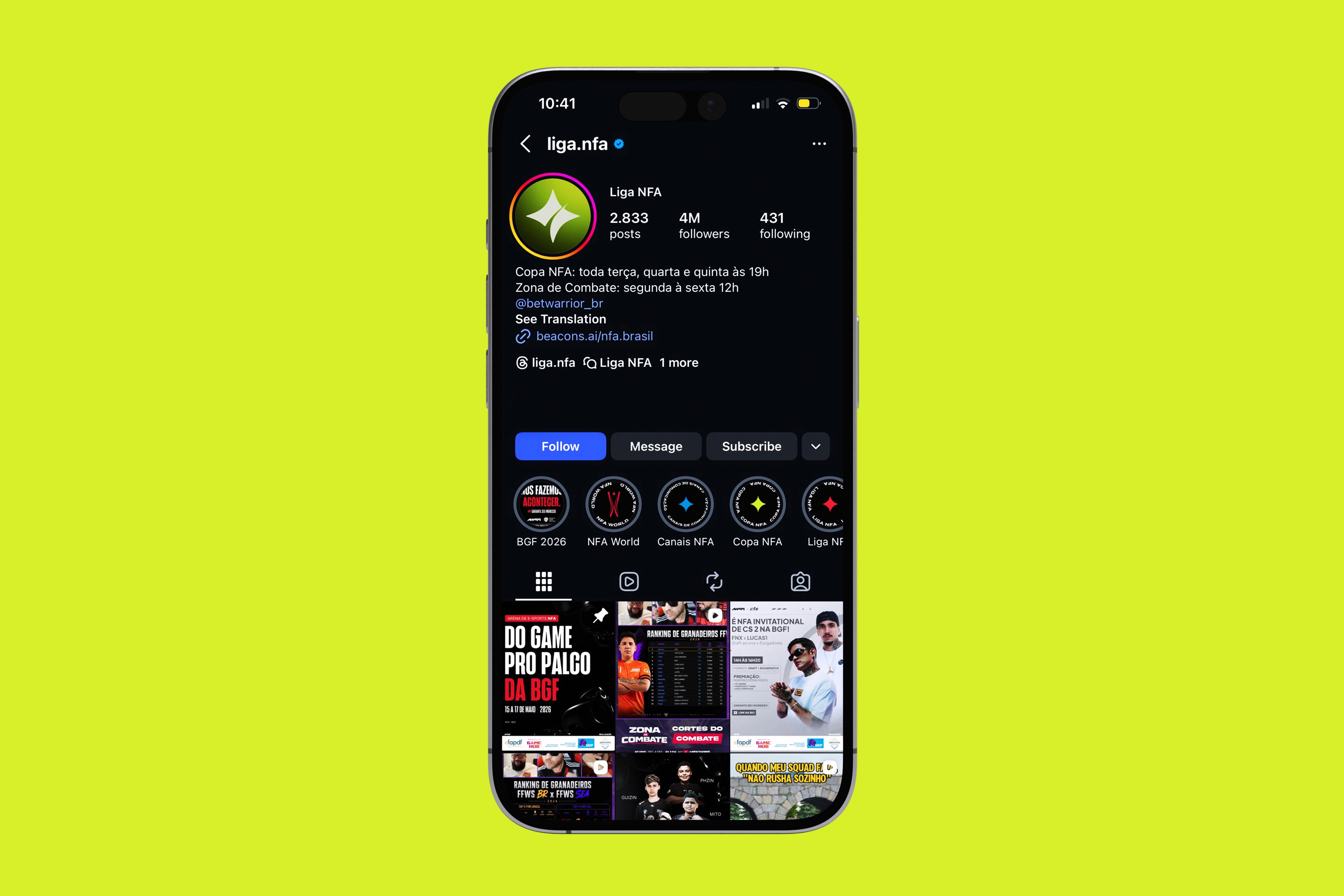
It has a highly engaged community with millions of followers across its social media channels, but its website no longer reflected that scale and needed a complete redesign.
The process today relies on personal referrals, scattered Instagram profiles, and slow back-and-forth messaging.
By the time a user discovers the price, they've already invested time building expectations. When it doesn't match, they drop off, or worse, hire anyway and feel let down.
68,5% don’t know the price before the first contact, 100% of drop-offs happen due to late price discovery, and the current process leads to post-hiring regret in approximately 40% of cases.
The process today relies on personal referrals, scattered Instagram profiles, and slow back-and-forth messaging.
By the time a user discovers the price, they've already invested time building expectations. When it doesn't match, they drop off, or worse, hire anyway and feel let down.
68,5% don’t know the price before the first contact, 100% of drop-offs happen due to late price discovery, and the current process leads to post-hiring regret in approximately 40% of cases.
The process today relies on personal referrals, scattered Instagram profiles, and slow back-and-forth messaging.
By the time a user discovers the price, they've already invested time building expectations. When it doesn't match, they drop off, or worse, hire anyway and feel let down.
68,5% don’t know the price before the first contact, 100% of drop-offs happen due to late price discovery, and the current process leads to post-hiring regret in approximately 40% of cases.
• THE SOLUTION
A centralized hub that reflects NFA's scale and works for every tournament, every region
A centralized hub that reflects NFA's scale and works for every tournament, every region
A centralized hub that reflects NFA's scale and works for every tournament, every region
The Reason
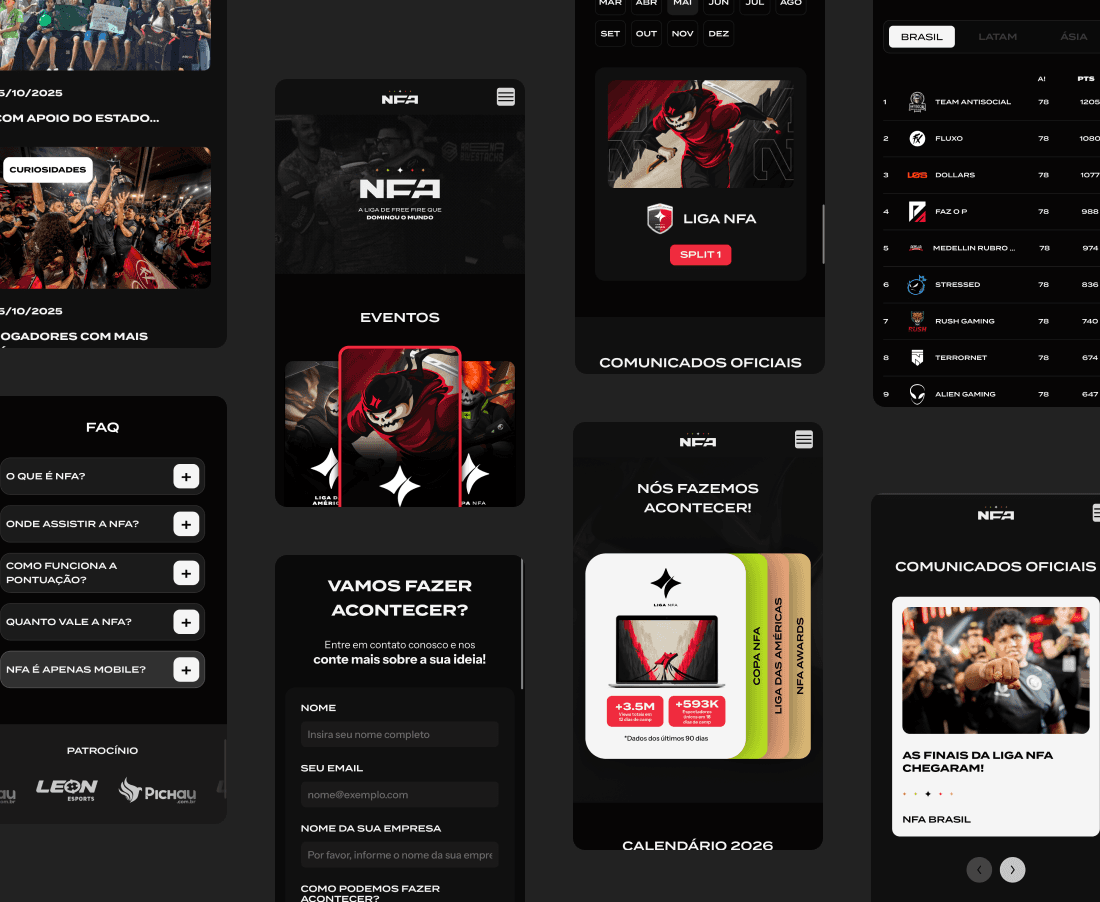
The redesign unified all tournament content into a single platform, with a distinct visual identity per competition, multilingual support, and a scalable design system built to grow with the brand.
The Reason
The redesign unified all tournament content into a single platform, with a distinct visual identity per competition, multilingual support, and a scalable design system built to grow with the brand.
The Reason
The redesign unified all tournament content into a single platform, with a distinct visual identity per competition, multilingual support, and a scalable design system built to grow with the brand.
The Reason
The redesign unified all tournament content into a single platform, with a distinct visual identity per competition, multilingual support, and a scalable design system built to grow with the brand.
The Goal
The goal wasn't just aesthetics. It was to make the site the primary source of truth for the competitive community, not a backup to Instagram.
The Goal
The goal wasn't just aesthetics. It was to make the site the primary source of truth for the competitive community, not a backup to Instagram.
The Goal
The goal wasn't just aesthetics. It was to make the site the primary source of truth for the competitive community, not a backup to Instagram.
The Goal
The goal wasn't just aesthetics. It was to make the site the primary source of truth for the competitive community, not a backup to Instagram.
• RESEARCH
Quantitative research directly with the most engaged audience
Quantitative research directly with the most engaged audience
Quantitative research directly with the most engaged audience
I collected feedback through NFA's Instagram, where the community was most active — to understand what was broken and what was missing. I also conducted competitive benchmarking against LCS, CBLOL, FFWS, and Liquipedia to understand how major leagues structure complex, multi-tournament experiences.
Key findings:
Users left the site because it didn't centralize content, Instagram filled the gap Identical tournament layouts created confusion about which competition was being accessed Global references showed that visual differentiation per tournament was standard practice at scale
I collected feedback through NFA's Instagram, where the community was most active, to understand what was broken and what was missing. I also conducted competitive benchmarking against LCS, CBLOL, FFWS, and Liquipedia to understand how major leagues structure complex, multi-tournament experiences.
Key findings:
Users left the site because it didn't centralize content, Instagram filled the gap Identical tournament layouts created confusion about which competition was being accessed Global references showed that visual differentiation per tournament was standard practice at scale
I collected feedback through NFA's Instagram, where the community was most active, to understand what was broken and what was missing. I also conducted competitive benchmarking against LCS, CBLOL, FFWS, and Liquipedia to understand how major leagues structure complex, multi-tournament experiences.
Key findings:
Users left the site because it didn't centralize content, Instagram filled the gap Identical tournament layouts created confusion about which competition was being accessed Global references showed that visual differentiation per tournament was standard practice at scale
I collected feedback through NFA's Instagram, where the community was most active, to understand what was broken and what was missing. I also conducted competitive benchmarking against LCS, CBLOL, FFWS, and Liquipedia to understand how major leagues structure complex, multi-tournament experiences.
Key findings: Users left the site because it didn't centralize content, Instagram filled the gap Identical tournament layouts created confusion about which competition was being accessed Global references showed that visual differentiation per tournament was standard practice at scale
• DESIGN DECISIONS
Three decisions that changed how the new website will work
Three decisions that changed how the new website will work
Three decisions that changed how the new website will work
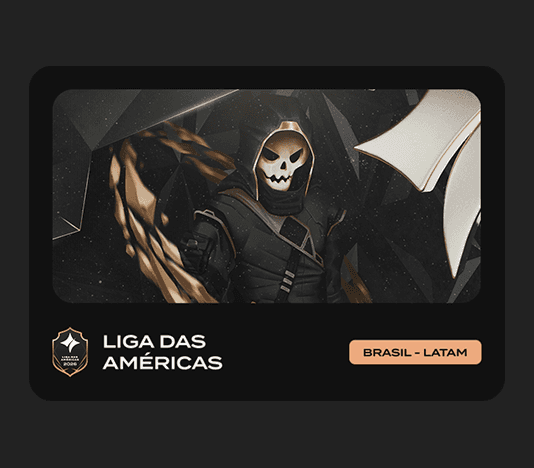
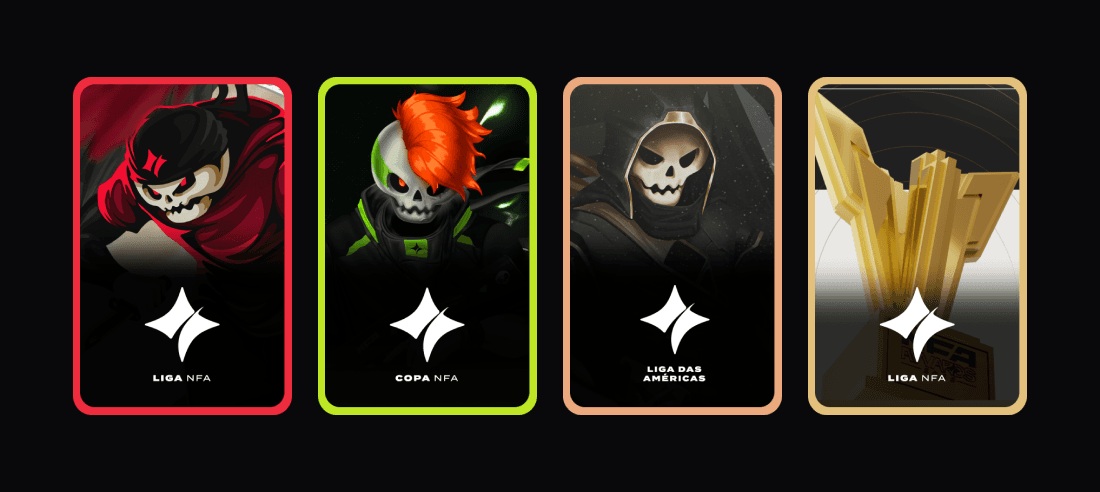
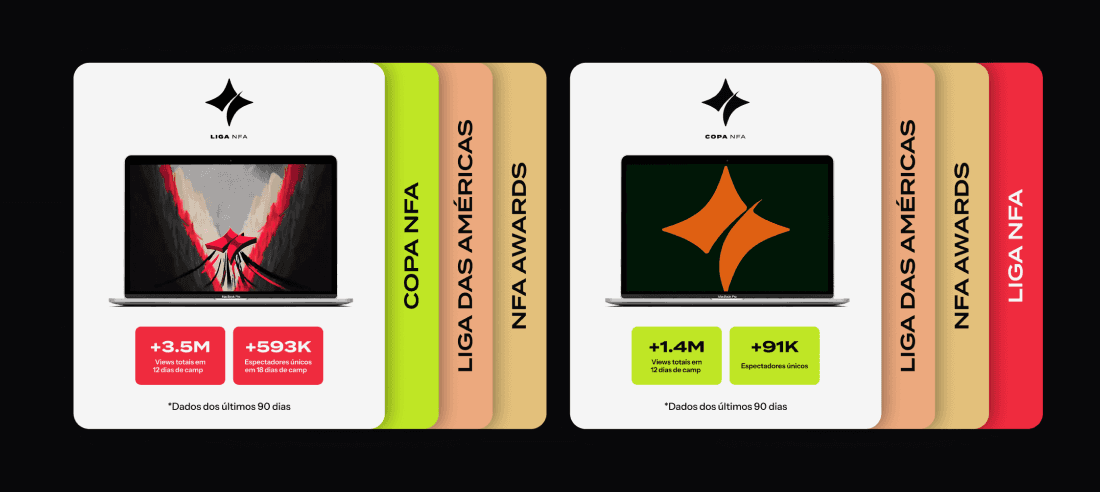
Unique Visual Identity Per Tournament
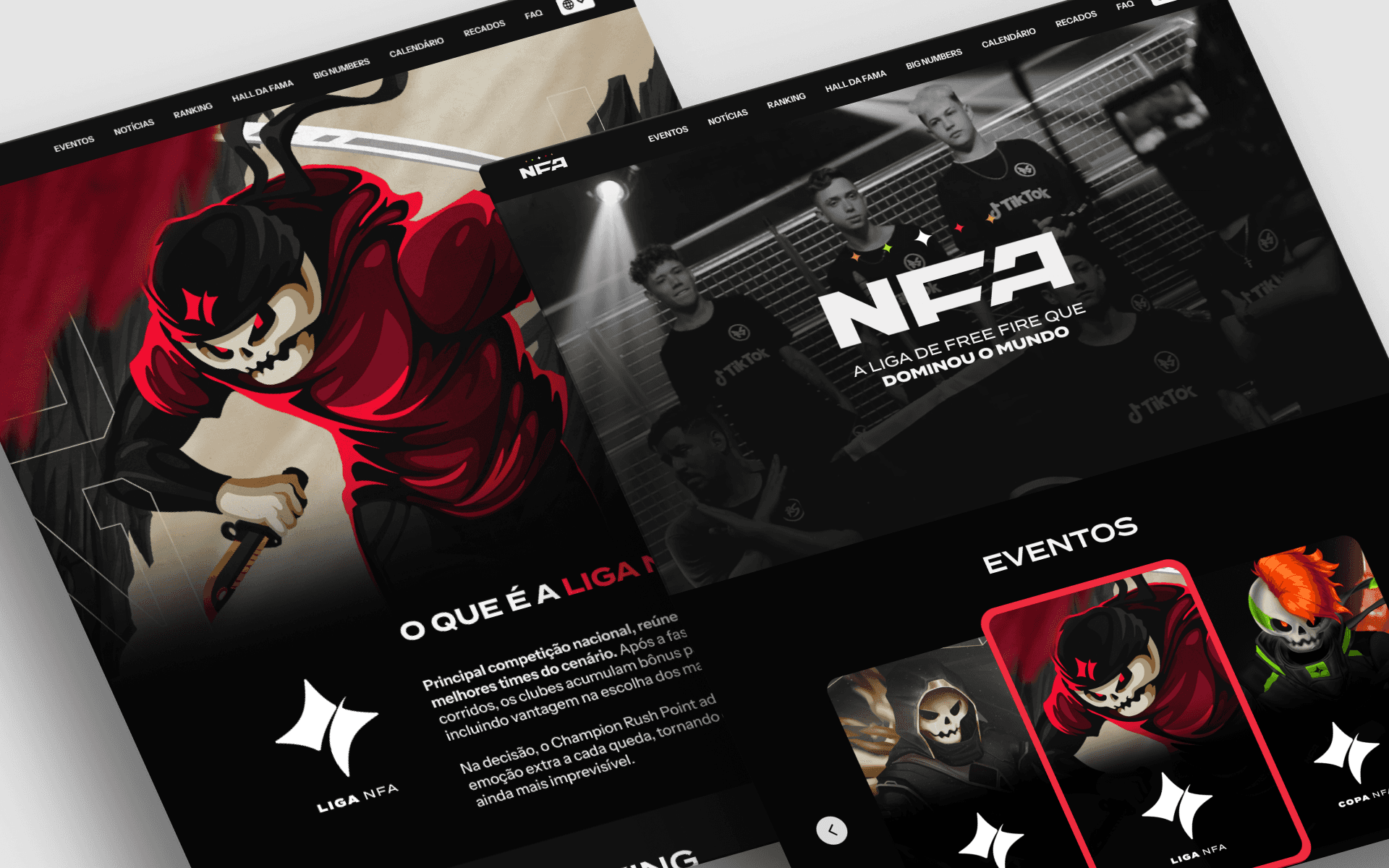
Users couldn't tell tournaments apart. Each competition now has its own color system and identity, distinct enough to navigate by feel, consistent enough to stay on-brand. This added component complexity but eliminated the core navigation confusion.
Unique Visual Identity Per Tournament
Users couldn't tell tournaments apart. Each competition now has its own color system and identity, distinct enough to navigate by feel, consistent enough to stay on-brand. This added component complexity but eliminated the core navigation confusion.
Unique Visual Identity Per Tournament
Users couldn't tell tournaments apart. Each competition now has its own color system and identity, distinct enough to navigate by feel, consistent enough to stay on-brand. This added component complexity but eliminated the core navigation confusion.
Unique Visual Identity Per Tournament
Users couldn't tell tournaments apart. Each competition now has its own color system and identity, distinct enough to navigate by feel, consistent enough to stay on-brand. This added component complexity but eliminated the core navigation confusion.
Content Centralization Over Feature Expansion
The temptation was to build notifications, social features, and user profiles. Instead, I prioritized making the existing content, news, schedules, standings, impossible to miss. Get the basics right first.
Content Centralization Over Feature Expansion
The temptation was to build notifications, social features, and user profiles. Instead, I prioritized making the existing content, news, schedules, standings, impossible to miss. Get the basics right first.
Content Centralization Over Feature Expansion
The temptation was to build notifications, social features, and user profiles. Instead, I prioritized making the existing content, news, schedules, standings, impossible to miss. Get the basics right first.
Content Centralization Over Feature Expansion
The temptation was to build notifications, social features, and user profiles. Instead, I prioritized making the existing content, news, schedules, standings, impossible to miss. Get the basics right first.
Multilingual
With NFA operating across multiple regions, internationalization couldn't be an afterthought. Building it into the design system from the start meant every future tournament would be globally ready without a redesign.
Multilingual
With NFA operating across multiple regions, internationalization couldn't be an afterthought. Building it into the design system from the start meant every future tournament would be globally ready without a redesign.
Multilingual
With NFA operating across multiple regions, internationalization couldn't be an afterthought. Building it into the design system from the start meant every future tournament would be globally ready without a redesign.
Multilingual
With NFA operating across multiple regions, internationalization couldn't be an afterthought. Building it into the design system from the start meant every future tournament would be globally ready without a redesign.
• IMPACT
Results brought
Results brought
Results brought
-70% reduction
-70% reduction
in off-platform navigation, users no longer needed Instagram to find basic information
in off-platform navigation, users no longer needed Instagram to find basic information
in off-platform navigation, users no longer needed Instagram to find basic information
3 languages
3 languages
supported at launch, with the design system built to scale to more without visual rework.
supported at launch, with the design system built to scale to more without visual rework.
supported at launch, with the design system built to scale to more without visual rework.
1 design system
1 design system
supporting multiple tournaments simultaneously, each with a distinct identity, zero inconsistency.
supporting multiple tournaments simultaneously, each with a distinct identity, zero inconsistency.
supporting multiple tournaments simultaneously, each with a distinct identity, zero inconsistency.
Learnings
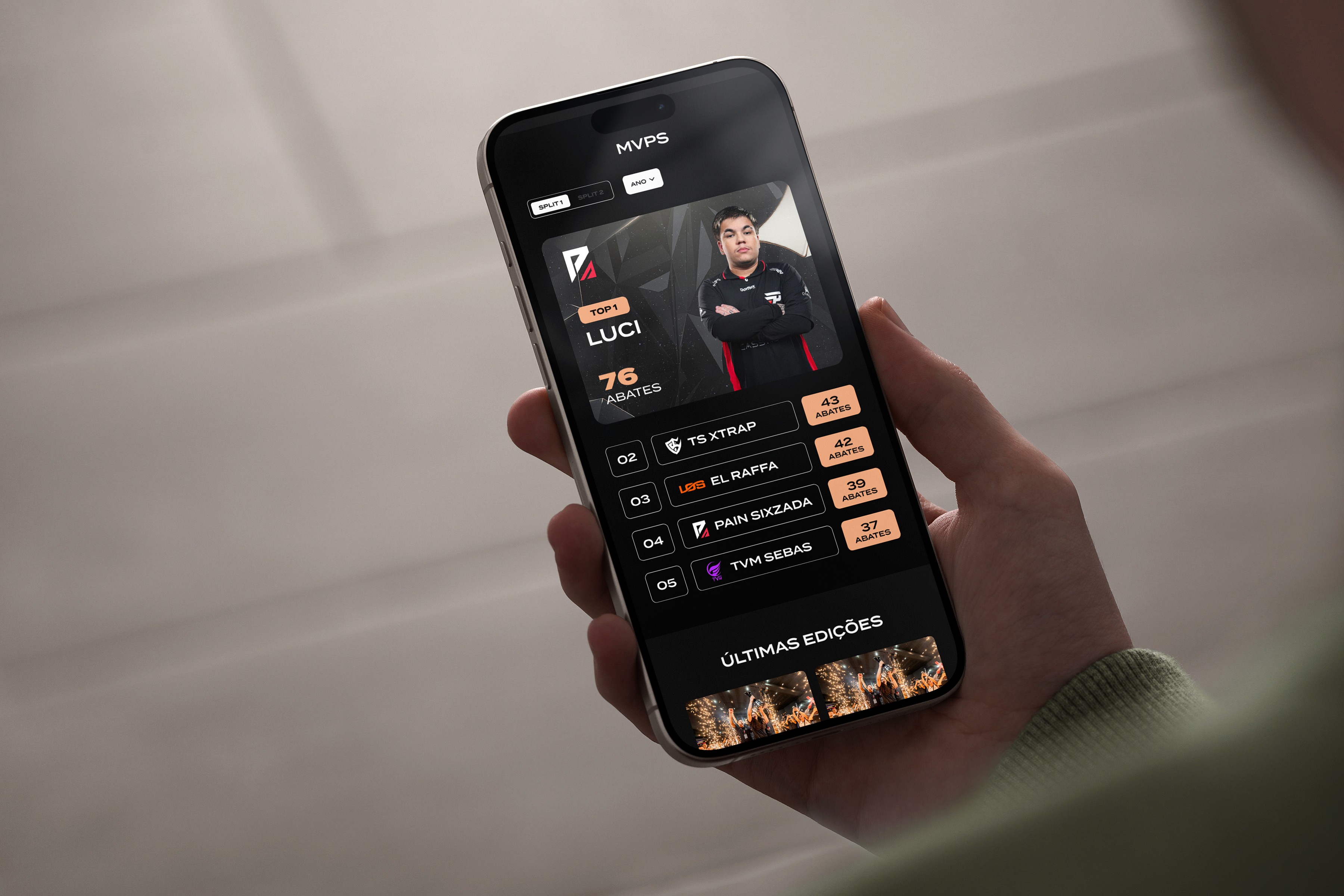
I prioritized a robust design system over a responsive mobile experience, a trade-off that made sense for the timeline, but one I'd revisit. A native app is the logical next step, and the foundation is already there.
Learnings
I prioritized a robust design system over a responsive mobile experience, a trade-off that made sense for the timeline, but one I'd revisit. A native app is the logical next step, and the foundation is already there.
Learnings
I prioritized a robust design system over a responsive mobile experience, a trade-off that made sense for the timeline, but one I'd revisit. A native app is the logical next step, and the foundation is already there.
Learnings
I prioritized a robust design system over a responsive mobile experience, a trade-off that made sense for the timeline, but one I'd revisit. A native app is the logical next step, and the foundation is already there.

